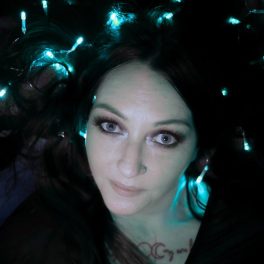
Mental health advocate Sabine NLD Bittle shares what it takes for her to live her best life (as much as she can) with a mental illness like bipolar disorder.
“Can you live a normal life with a mental illness?” I get asked that a lot. But I think what they mean is … can you live a good life? Yeah. I think you can. Living with bipolar has taught me that there’s an art to living … and like any beautiful, messy, wild and spectacular art, it takes time. Like a lot of time.
Even just getting a mental health diagnosis takes time
From my early teens, I already had a sense that something, somehow, somewhere, was out of whack. But despite searching for answers, it took years before a doctor finally pulled all the pieces of the puzzle together into that “aha” moment. And yeah, that moment of diagnosis can be both wildly liberating and utterly terrifying, but it’s really that moment when our healing can truly begin.
We need to allow ourselves time to process the diagnosis
Finding out that you have a mental disorder can be shattering. I remember feeling scared and relieved all at the same time. Lost and found in one breath. I remember how the ground fell from underneath me, how the whole world flipped on its head. It took me time to learn and accept what bipolar was, what it was in my life, and who I was as a person with or without it. It didn’t happen overnight, it was a gradual process, a learning and unlearning. So if you’re going through this right now, be patient with yourself … and always come home to who you are.
We give ourselves time to share our diagnoses (if at all)
I was warned in the very beginning to be careful about who I told about my bipolar because my doctor didn’t want me to be misunderstood or hurt by the ignorance of others. Even today, people’s ideas about mental disorders are largely fed by fiction and myth. It took me years to open up, slowly, slowly, person by person. So give yourself time to feel the waters. You obviously don’t have to tell a single soul if you don’t want to, but it’s good to remember that when you tell the right people in your life you can build a much stronger support network. And honestly, for me, sometimes people are my best medicine.
We need time to fine-tune our meds (and explore our other options)
Medication is a tricky one because psychiatric diagnoses are complex … and so are the treatments. In my experience, sometimes the meds work, and sometimes they don’t. Sometimes you need a combination of pills (especially with bipolar disorder). And, of course, many medications come with long lists of possible side effects. It can take a while to find what works best for you. Medication is not the only road, but whatever path you take (or combination of paths), don’t ever be afraid to speak up if something isn’t working for you. I believe we owe it to ourselves to have as many conversations with our doctors as we need to.
We need time to learn our triggers
Living with bipolar means I’ve had to become very conscious of what could trigger a swing into bipolar depression or mania. Some triggers are easier to identify than others – like sleep disturbances, stress, grief, and trauma. But others take a little longer to figure out. For me, it took years to acknowledge (and even accept) that some of my triggers include people, music (seriously), and travel. A change in seasons is another trigger for me. So be patient, be curious, and remember to check in with yourself often.
We owe ourselves time to find some healing
I think that society has trapped us all in a tiny box. We’re chasing elusive tails, running at the edge, living on the surface, screaming on the inside. But a mental illness is the perfect nudge to take a step back and find a way of living that can be more healing. For me that meant living closer to nature, switching to freelance work, detaching from toxic people, keeping my phone on silent (or airplane mode!), and a thousand other little steps in between. Give yourself time to find what works for you, and then honour it. You are worth it. I promise.
We honour ourselves with time to recover
It takes time to recalibrate after an episode. Or from those times when you feel like you’re going backwards. You know, when you’re doing all the right things, you’re putting in all that self-work, you’re honouring who you are, and then it all just falls apart. It could be a particularly major episode, or a trauma, or a rough patch. Sometimes it’s a life shift or your mental disorder changes its patterns … and sometimes it’s nothing at all. And yes, I know it’s exhausting my beautiful human, but be patient with yourself while you pull together all the shattered pieces of you. It’s in these moments that I remind myself of these beautiful words …
“Breathe, Darling. This is just a chapter. It’s not your whole story.” – S. C. Lourie
And finally, we give ourselves time for the old parts of us to fall away …
… and new ones to blossom. We’re a work in progress, right? I haven’t met anybody who isn’t a work in progress – mental disorder or not. But living with bipolar or schizophrenia, anxiety, depression, or borderline personality disorder means you can’t just cruise through life anymore (sorry). It helps to become more conscious … and becoming more conscious opens the doors and flings wide the windows to change. It becomes a spiritual journey … because the only place you can really go is inwards. And that inner journey takes the most time of all.
So maybe it’s not about living a normal life with a mental illness, maybe it’s about putting our hearts into living a good life, as much as we can. Of course we fall sometimes, and often it may feel out of reach, but it’s not impossible. Give yourself time. You are worth every second.